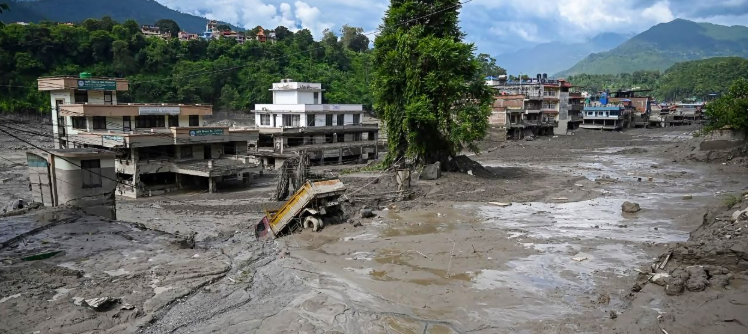
Kathmandu- Floods and mudflows along Nepal’s Bhote Koshi–Trishuli river system have left at least 2.2 million tonnes of debris across the areas analysed, according to a preliminary assessment by the United Nations Development Programme (UNDP).
The flash flood, reportedly triggered by a glacial collapse on August 26, swept huge volumes of water, mud, rocks and other debris through communities in several districts. Nepal has reported more than 1,000 deaths and over 4,000 people missing, while 10,451 people have been rescued so far.
The disaster has also caused significant damage to Nepal’s energy infrastructure. Eleven hydropower stations and one solar power plant, with a combined capacity of 431.1 megawatts, have stopped operating. A further 15 power projects under construction, with a planned capacity of 470 megawatts, have also been damaged.
According to government figures cited by UNDP, 84,270 people across 17 municipalities in six districts have been affected. Most of the affected municipalities are rural and located in Nepal’s hill regions, where around 67.4 percent of people are engaged in agriculture.
The timing of the disaster has raised additional concerns for farming communities. Nepal’s main monsoon planting season runs from June through September, meaning damage to crops, livestock and farmland could have a lasting impact on food security and household incomes.
UNDP Nepal Resident Representative Kyoko Yokosuka described the situation along the Trishuli corridor as devastating. She said families have lost loved ones, homes and livelihoods, while communities are struggling to restore essential services and reconnect with one another.
UNDP conducted the assessment by combining satellite-based building damage data from Copernicus EMS and SERTIT with other available information and locally adapted engineering estimates. The organisation said the findings are preliminary and will be updated as additional information becomes available.
Of the estimated debris, around 556,200 tonnes is believed to have come from damaged buildings. This estimate is based on satellite assessments covering 2,359 buildings, and the amount is expected to increase as further damage is identified.
The debris consists of building materials, household belongings, vegetation, rocks and sediment. Beyond showing the scale of destruction, the debris is creating serious challenges for search and rescue teams, as people may still be trapped or missing beneath collapsed structures and large piles of mud and debris.
The huge volume of debris is expected to make the recovery process difficult as affected communities work to clear homes, roads and public spaces. Damage to hydropower and other energy infrastructure has also disrupted electricity supplies, further complicating the restoration of essential services.
UNDP said its RAPIDA (Rapid Assessment and Analysis for Immediate Recovery and Development Action) methodology is intended to provide governments and partners with timely evidence to support early recovery planning and help guide reconstruction and rehabilitation efforts.