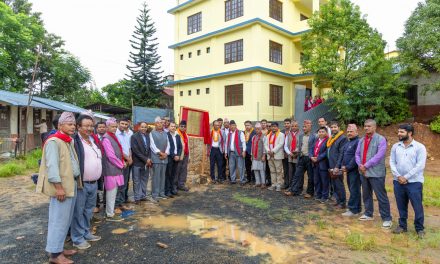
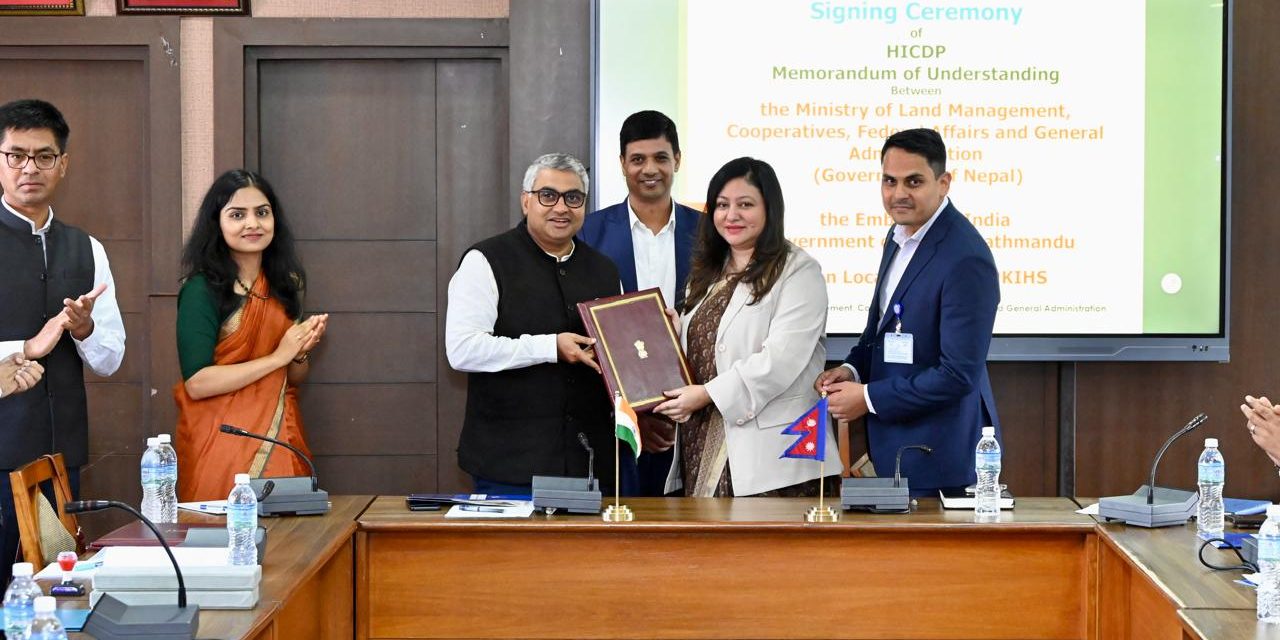
Kathmandu- The Embassy of India in Kathmandu, Nepal’s Ministry of Land Management, Cooperatives, Federal Affairs and General Administration, and project implementing agencies of the Government of Nepal have signed Memorandums of Understanding (MoUs) for the implementation of eight High Impact Community Development Projects (HICDPs).
The projects will be implemented with grant assistance from the Government of India in the education, health and agriculture sectors, with a total estimated cost of Rs 803 million.
The eight projects will be implemented through local authorities and institutions of the Government of Nepal.
The projects include the digitalisation of B.P. Koirala Institute of Health Sciences (BPKIHS) in Dharan, Sunsari, construction of a Krishi Utpadan Sankalan Tatha Bikri Kendra in Temkemaiyung Rural Municipality-9 of Bhojpur, and construction of a Municipal Agricultural and Livestock Centre Building in Jwalamukhi Rural Municipality-6 of Dhading.
Similarly, the agreement covers the construction of the Belbari Multiple Campus building in Belbari Municipality-3 of Morang, a 10-bed hospital in Dungeshwor Rural Municipality-5 of Dailekh, and an Agriculture Promotion Centre in Sarkegad Rural Municipality-4 of Humla.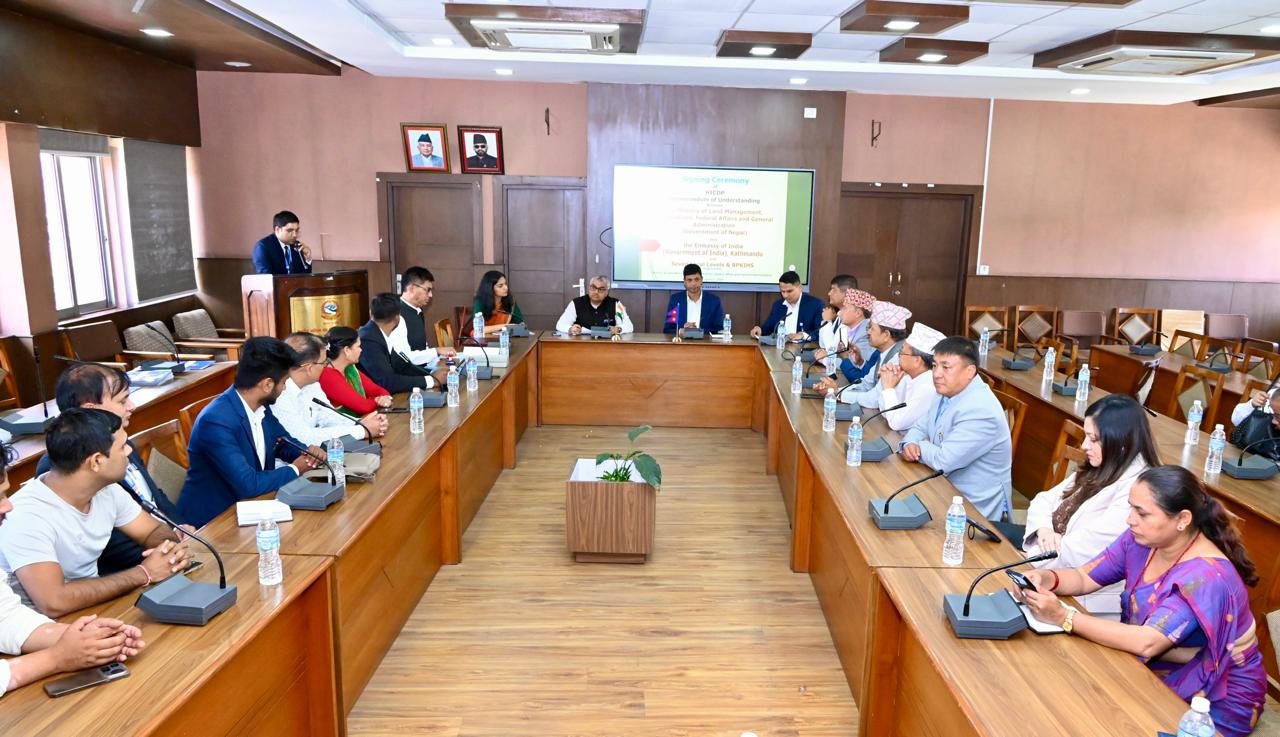
The remaining projects include construction of a cold store in Kaligandaki Rural Municipality-4 of Syangja and a 15-bed hospital building in Barju Rural Municipality of Sunsari.
According to the Embassy of India, the latest agreements bring the total number of HICDPs undertaken by the Government of India in Nepal since 2003 to 605.
Of the total projects, 512 have already been completed in areas including health, education, agriculture, drinking water, connectivity, sanitation and public utilities. The remaining projects are at various stages of implementation.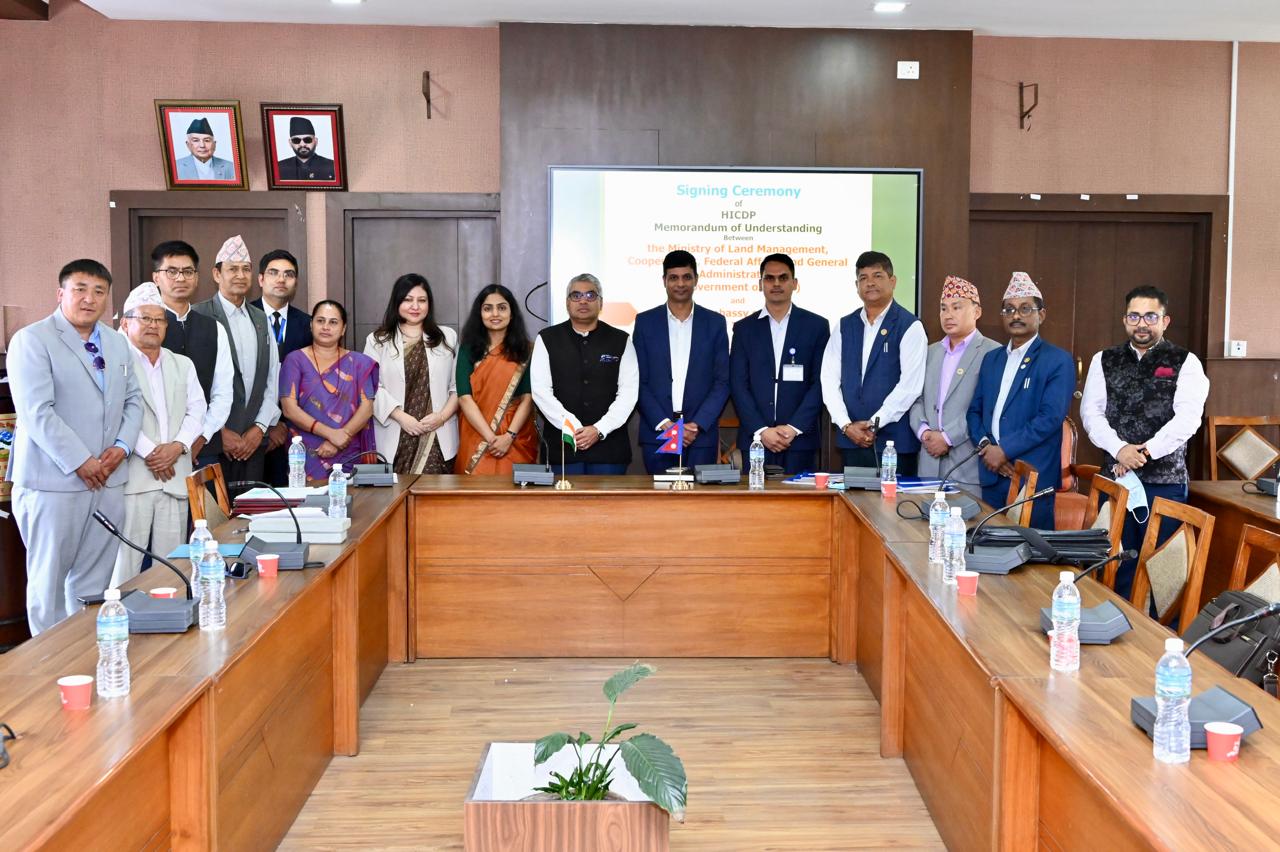
India and Nepal have been engaged in wide-ranging cooperation across multiple sectors as close neighbours. The implementation of the HICDPs is aimed at strengthening infrastructure and supporting development efforts in Nepal’s priority sectors.
The projects are expected to contribute to improved public services and infrastructure while supporting local-level development and community welfare.