
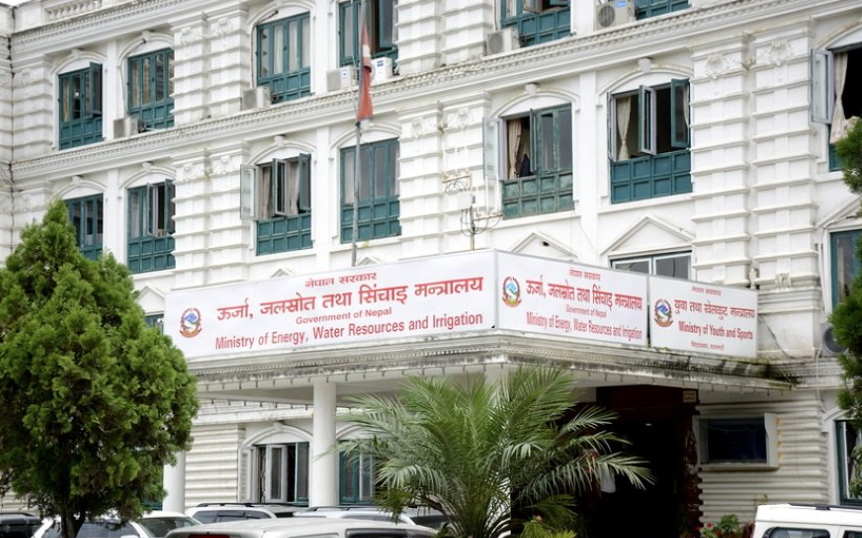
Kathmandu – The government has prioritized preparedness in the water and meteorological sectors to reduce the growing risks of floods, glacial lake outburst floods (GLOFs), and weather-related disasters associated with climate change. To this end, the government has published two white papers outlining plans to lower water levels in high-risk glacial lakes, expand flood early warning systems across river basins, and use artificial intelligence in weather forecasting.
The Water Resources Research and Development Centre and the Department of Hydrology and Meteorology, under the Ministry of Energy, Water Resources and Irrigation, published separate white papers on Sunday. The documents emphasize the sustainable use of water resources, climate-resilient infrastructure, aviation safety, and disaster risk reduction through modern technology and scientific research.
According to the government’s plans, water levels in four high-risk glacial lakes will be lowered to minimize potential disasters. The lakes include Thulagi in Manang, Lower Arun in Sankhuwasabha, and Lumding Tsho and Hongu-2 in Solukhumbu. The government has proposed the GLOF Sanjeevani Project, which is scheduled to run from 2026 to 2033 with an estimated budget of USD 49.9 million.
The initiative builds on previous efforts to reduce risks by lowering the water levels of Tsho Rolpa in Dolakha and Imja Lake in Solukhumbu. Similarly, flood early warning systems will be expanded across six major river basins to reduce loss of life and property caused by flooding. The Water Resources Research and Development Centre is installing these systems under the Priority River Basin Flood Risk Management Project, with an estimated cost of USD 7.54 million. The centre also plans to operate round-the-clock flood forecasting and early warning services from Jestha 1 through the end of Ashoj each year.
To improve the accuracy and reliability of weather forecasts, the government plans to introduce artificial intelligence (AI), machine learning (ML), and high-performance computing (HPC) systems. The country’s 503 manual weather stations will gradually be upgraded to automatic weather stations. The government has also proposed maintaining meteorological radars in Surkhet, Palpa, and Udayapur, along with installing a new radar system for the Kathmandu Valley.
The government has further emphasized delivering weather-related information to vulnerable communities in a timely manner. It aims to expand early warning services for floods and other weather-related hazards through mobile applications, toll-free services, social media, and coordination with local governments.
However, effective implementation of the proposed plans will require adequate and sustained funding, skilled technical personnel, regular maintenance of modern equipment, and coordination among government agencies. While the publication of the white papers marks an important step, their actual impact will depend on effective implementation, the reliability of early warning systems, and the timely delivery of warnings to communities at risk.