
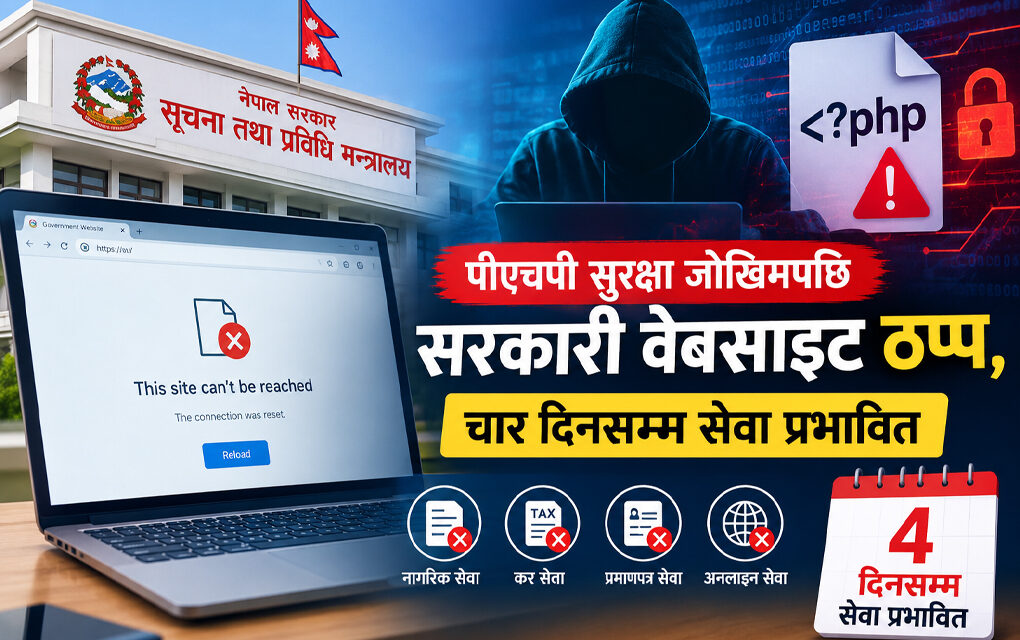
Kathmandu: Nepal’s ambition to make government services faster, paperless and accessible online has faced another setback, as many government websites remain inaccessible following reported security vulnerabilities in the PHP coding system.
The disruption has affected several essential public services, raising concerns about the government’s preparedness to manage cybersecurity risks and restore digital services promptly.
Essential Public Services Disrupted
The Department of Transport Management’s website remains inaccessible, disrupting online applications for new driving licences. The Vehicle and Consignment Tracking System (VCTS), operated by the Department of Revenue Investigation, has also been affected, forcing transport operators to carry physical invoices and other documents during transit.
The Nepal Rastra Bank’s website has also been reported offline, limiting access to important information, including daily foreign exchange rates. Meanwhile, disruptions to the Department of Land Management and Archive’s website have affected online land-related services across the country.
The Kalimati Fruits and Vegetable Market’s website has also remained unavailable, preventing farmers, traders and consumers from easily accessing daily wholesale prices.
Private Sector Restores Services Faster
While private-sector banks and financial institutions reportedly restored their systems after addressing similar security concerns, several government agencies continue to face service disruptions.
According to information technology experts cited in the report, resolving certain website security issues can take between one and four hours, provided technicians have the necessary access and resources. However, the actual time required depends on the nature and severity of the vulnerability.
The prolonged disruption has raised questions about technical preparedness, coordination and the availability of skilled IT personnel within government agencies.
Some essential services have reportedly resumed operations. These include the Department of Passports’ online enrolment system, the Department of Foreign Employment’s services, the National Identity Card system and the Nepal Electricity Authority’s online bill payment system.
However, many other government websites remain affected.
‘Online Instead of Queues’ Promise Under Scrutiny
The incident has renewed scrutiny of the government’s commitment to delivering public services digitally. The slogan “Online, Not in Line” was promoted as part of its electoral commitments to reduce physical visits to government offices and make services more accessible.
Yet, repeated disruptions to online systems have forced citizens and businesses to face delays in accessing essential services.
Government websites are not merely platforms for service delivery. They are also important sources of public information, official notices, statistics and documents required for transparency and citizens’ right to information.
When these systems become unavailable, the consequences extend beyond technical inconvenience, affecting daily administrative work and public access to information.
Digital Nepal Requires More Than Websites
The latest disruption highlights the need for stronger cybersecurity measures, regular system maintenance, skilled technical personnel and reliable backup arrangements.
Although technical failures and security vulnerabilities can occur in any digital system, the ability to identify risks, resolve problems and restore services promptly is equally important.
The government’s digital transformation agenda will depend not only on moving services online but also on ensuring that those services remain secure, reliable and accessible during technical emergencies.
Without effective recovery mechanisms and better coordination among government agencies, the gap between the promise of digital governance and the experience of citizens is likely to persist.