– Keshav Nepal
In the realm of international relations, geographical proximity often plays a decisive role in shaping the nature and depth of interactions between nations. Countries that share borders are inevitably bound by shared challenges and opportunities—ranging from trade and security to migration and environmental concerns. In regions marked by diverse socio-economic landscapes, the balanced growth of neighboring states becomes essential for maintaining peace, stability, and collective prosperity. This reality is particularly evident in the relationship between India and Nepal, two countries linked not only by geography but also by centuries-old cultural, historical, and economic ties.
Historical Foundations and Shared Ties
India and Nepal share an open border, deep people-to-people connections, and civilizational bonds rooted in language, religion, and culture. These shared foundations have fostered a relationship based on mutual trust and cooperation. Over the decades, India has emerged as Nepal’s most consistent and trusted development partner, supporting the Himalayan nation through political transitions, economic reforms, natural disasters, and infrastructure development. This partnership is not transactional but evolutionary, adapting to Nepal’s changing development priorities and aspirations.
Electoral Support and Democratic Cooperation
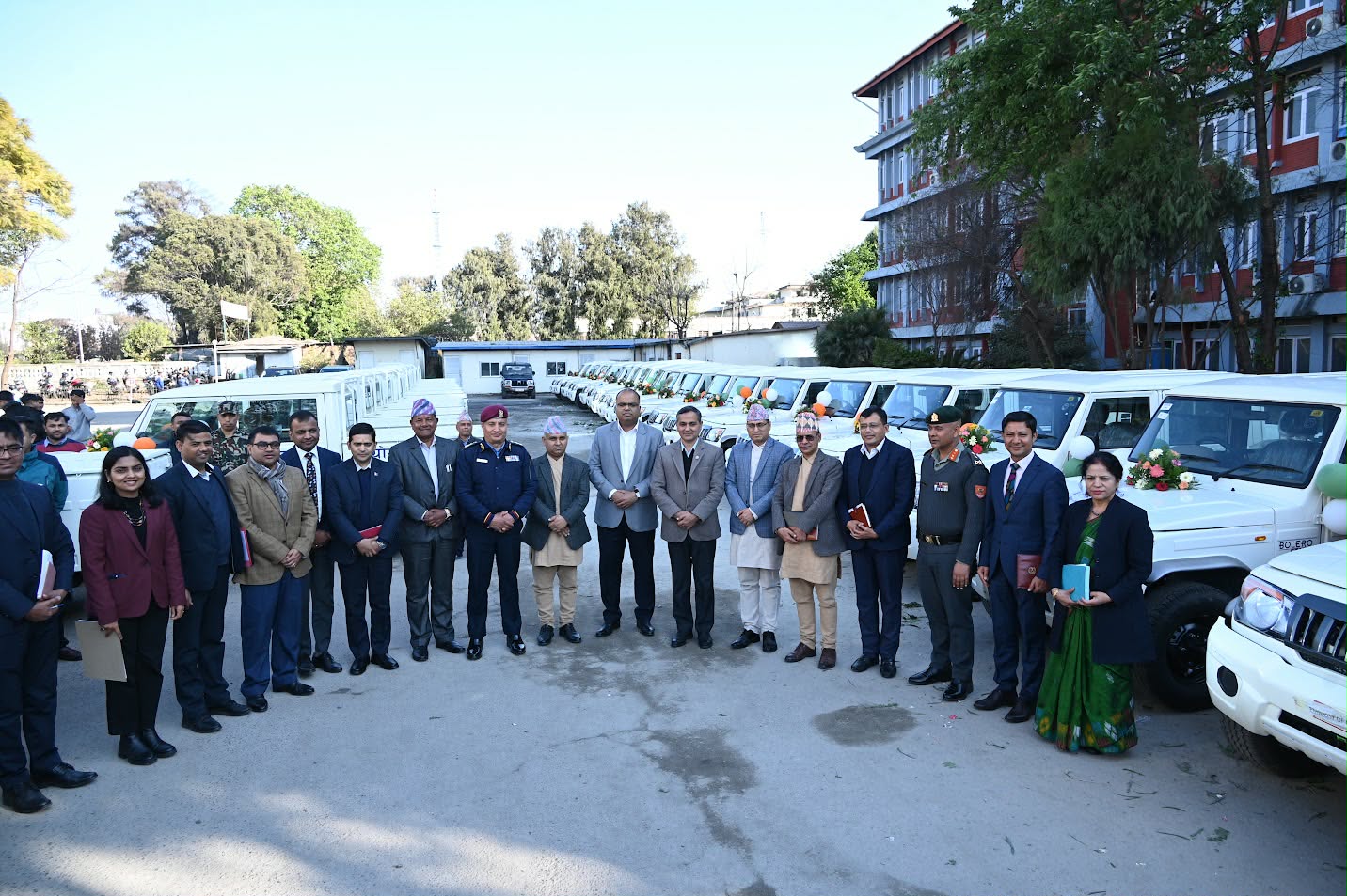
One of the most visible recent examples of India’s support is its assistance to Nepal’s democracy. In January 2026, India formalised logistical support for Nepal’s general elections scheduled for March 5, 2026, by committing over 650 vehicles to assist in election management. The first tranche of 60 double-cab pickup vehicles was officially handed over to Nepal by the Indian Embassy in Kathmandu. This gesture continues a longstanding tradition of electoral cooperation, under which India has gifted more than 2,400 vehicles to Nepali institutions since 2008. Such support underscores India’s commitment to strengthening democratic institutions in Nepal, reinforcing political stability as a cornerstone of development.
Strengthening Ties: A New Era of Cooperation (2025–2026)
The period between 2025 and 2026 has marked a renewed momentum in Nepal–India relations, characterized by what observers describe as “quiet diplomacy” combined with actionable economic and development agendas. Rather than grand rhetoric, the focus has been on tangible outcomes that directly benefit citizens in both countries.
High-Impact Development and Infrastructure
A key pillar of this cooperation has been the expansion of High-Impact Community Development Projects (HICDPs). In 2025, India committed a grant of Rs 390 million for five major projects in education and healthcare across the Madhesh, Sudurpashchim, and Gandaki provinces. These projects aim to improve grassroots-level infrastructure, ensuring that development reaches underserved communities and contributes to inclusive growth.
Physical connectivity has also witnessed a multimodal transformation. An amendment to the Treaty of Transit in November 2025 enabled the movement of bulk cargo and rail freight between Jogbani in India and Biratnagar in Nepal, reducing transportation costs and enhancing trade efficiency. Additionally, the success of the Motihari–Amlekhgunj petroleum pipeline has paved the way for further expansion to Chitwan and Jhapa, strengthening Nepal’s energy security and reducing dependency on road-based fuel transport.
Energy Cooperation: A Pillar of Economic Sovereignty
Energy has emerged as the most successful and transformative aspect of India–Nepal cooperation. Nepal’s transition from a net importer of electricity to a growing exporter marks a historic shift in its economic trajectory. A landmark 10-year agreement allows Nepal to export up to 10,000 MW of electricity to India, providing a stable market for its hydropower surplus.
This cooperation has also taken on a regional dimension. Nepal began exporting electricity to Bangladesh through the Indian grid, showcasing India’s role as a facilitator of regional energy trade. Major hydropower projects, such as the 900 MW Arun-III project, are nearing completion, promising free power and royalties for Nepal while contributing to clean energy goals in the region. Further, December 2025 marked a historic milestone with the Indian Oil Corporation exporting LNG to Nepal, diversifying Nepal’s energy mix and enhancing resilience.
Economic and Financial Integration
Economic cooperation has deepened through innovative financial reforms. In October 2025, new policies allowed Indian banks to lend in Indian Rupees to Nepali entities, significantly reducing exchange rate risks and encouraging cross-border investments. This move is expected to boost infrastructure financing, industrial growth, and entrepreneurship in Nepal.
Digital connectivity has also transformed economic interactions. The integration of India’s Unified Payments Interface (UPI) with Nepal’s FonePay QR system has simplified digital transactions, benefiting tourists, traders, and migrant workers alike. Seamless digital payments have improved remittance flows, supported small businesses, and strengthened people-to-people economic engagement.
Science, Technology, and Space Collaboration
India and Nepal’s partnership has expanded into science and technology, symbolizing trust and shared ambition. In 2025, Nepal’s Munal satellite was successfully launched using India’s PSLV rocket, marking a significant step in Nepal’s space capabilities. This collaboration not only enhanced Nepal’s capacity for earth observation and disaster management but also demonstrated India’s role as a reliable partner in advanced technologies.
Agriculture, the backbone of Nepal’s economy, has also benefited from cooperation under the 2025–26 Agricultural Cooperation Framework. Initiatives in digital agriculture now provide Nepali farmers with real-time weather forecasts, soil health data, and access to climate-resilient seeds. These measures aim to boost productivity, ensure food security, and build resilience against climate change.
Political Dynamics and the Road Ahead
Despite shifts in Nepal’s domestic political landscape—including the resignation of Prime Minister K.P. Sharma Oli in September 2025 following youth-led protests—the strategic trajectory of Nepal–India relations has remained stable. High-level joint commissions and bilateral mechanisms have been reactivated to address issues ranging from border management and trade facilitation to disaster response and security cooperation. This continuity highlights the maturity of the relationship, which transcends changes in leadership and political cycles.
As noted by the Embassy of India in Kathmandu in January 2026, the ongoing cooperation “is an apt reflection of the multi-faceted development partnership and symbolises the deep mutual trust between the people of India and Nepal.”
Conclusion
As Nepal prepares for its landmark March 2026 elections, the development partnership between India and Nepal stands as a model of how neighboring countries can leverage geographic proximity and cultural affinity for shared prosperity. From infrastructure and energy to digital finance and space technology, the relationship has evolved into a comprehensive partnership rooted in mutual respect and pragmatic cooperation. The “Himalayan bridge” connecting the two nations appears stronger than ever, offering a compelling precedent for regional integration and collaborative growth in South Asia.