
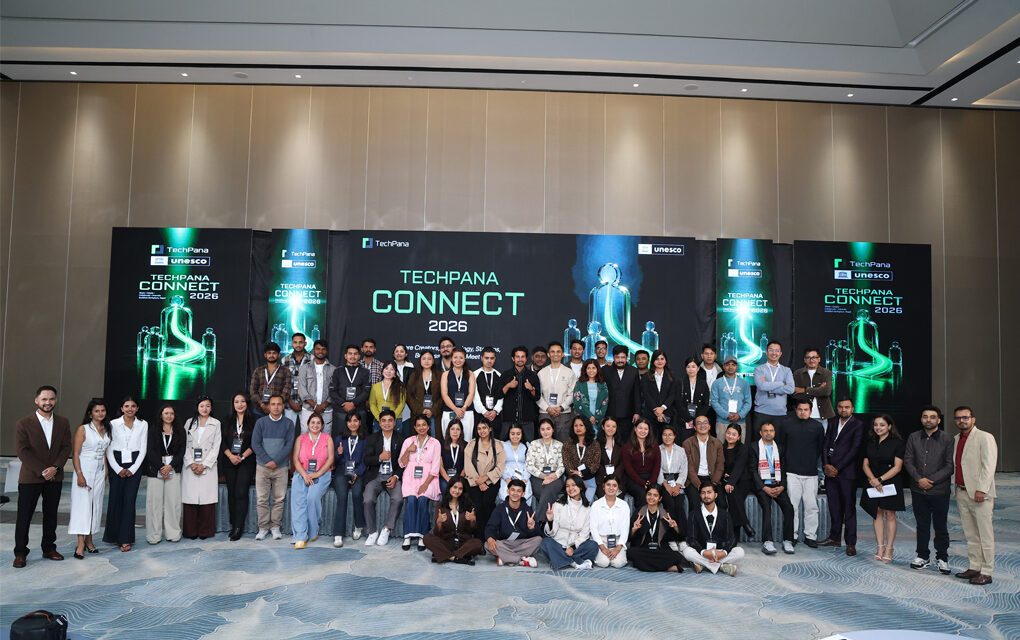
Kathmandu – Content creation is about more than gaining views and likes. As digital platforms expand their influence in Nepal, the reliability of information, the social impact of content and creators’ ethical responsibilities are central concerns. These issues brought together 50 content creators from across Nepal at a one-day workshop organized by TechPana in collaboration with UNESCO under TechPana Connect 2026, held on 3 November 2026 in Lalitpur, Nepal.
Media and information literacy was at the heart of the discussion: how to identify misleading information, check facts and make informed decisions about what to publish. The workshop aimed to strengthen these skills and promote fact-based, ethical content creation in response to unreliable and unethical material online.
The 50 participants brought varied perspectives to these questions. TechPana and UNESCO selected them from hundreds of applications submitted by content creators across Nepal, considering their content, areas of focus and social diversity.
For TechPana CEO Bijay Timalsina, creators’ responsibilities extend beyond audience numbers. He emphasized the need to consider the social impact of their work, the people it affects, legal requirements and ethical responsibilities.
Highlighting the growth of content creation in Nepal and the expanding role of content creators, Jaco du Toit, UNESCO Representative to Nepal, said, “As content creators, you document cultural traditions, highlight community concerns and explain issues that affect everyday life. What you share, whose stories you tell and how you engage with audiences can help build a more informed, inclusive and trustworthy digital environment.”
Distinguishing fact from misleading information was a central theme, explored through the interactive Fact or Fake? exercise and practical fact-checking work.
The ethical boundaries of content creation were another focus. Senior technology journalist and author Bishwas Regmi examined the importance of content creation alongside the responsibilities it entails.
Turning information literacy into practice, TechPana fact-checkers and researchers Hikmat Acharya and Ranjita Uprety worked with participants on identifying misleading information online and applying verification techniques through The Truth Lab.
Legal responsibilities also formed part of the discussion. Advocate Prabin Subedi of Paramount Legal Advisory Services addressed cyber law, copyright and ways for content creators to avoid legal risks.
Alongside questions of accuracy and responsibility, participants explored how to communicate effectively. Content creator and trainer Nischal Sharma addressed video quality and camera use, while creators Dipesh Tripathi and Binayak Kuinkel shared approaches to developing ideas, writing scripts and creating opening hooks to engage audiences.
Responsible use of artificial intelligence, creator wellbeing and online safety were further concerns. Ayush Shrestha and Yojana Magar explored the responsible and effective use of AI in content creation, while Ganga Pathak addressed stress associated with views and engagement, as well as online safety.
The discussions culminated in an Ethical Content Creator Commitment signed by all 50 participants, pledging to create and share positive, truthful and ethical content. The commitment brought the focus back to the choices creators make about what they publish and how they engage with their audiences.
These commitments echo the purpose of the celebration of Global Media and Information Literacy (MIL) Week in Nepal: encouraging people to critically assess information and create and share content responsibly. For content creators, this means putting media and information literacy into daily practice—checking facts, considering the impact of their work and helping build a more trustworthy digital environment.