Kathmandu- The fifth edition of the Digital Nepal Conclave (DNC) 2026, organized by ICT Foundation Nepal, has concluded at The Plaza, Pulchowk, Lalitpur, following extensive discussions on digital resilience, governance, data, artificial intelligence (AI), digital infrastructure and the digital economy.
Held under the theme “Building Digital Resilience: Redefining Governance, Data and the Digital Economy,” the conclave brought together representatives from the government, Parliament, local governments, private sector, technology industry, startups, investors, academia, development partners and young innovators.
The discussions focused on building digital systems capable of continuing to provide essential services during disasters and crises, strengthening data governance, expanding citizen-centric digital services, promoting responsible AI and developing a sustainable digital economy.
The opening session, titled “Governance & Resilience: Architecting the Digital Foundation,” featured discussions on digital governance, public service reform and lessons from Nepal’s 2026 flash floods. Participants discussed how data and digital experiences from disasters could be used to build stronger and more resilient digital systems.
Addressing the event, Communications Minister Dr. Bikram Timilsina said digital transformation should not be limited to technological expansion or modernization of government services but should be connected with governance, development and nation-building.
He noted that the floods in the Rasuwa–Bhotekoshi area had tested not only physical infrastructure but also information systems, communication networks, institutional coordination and the country’s preparedness for crises.
He emphasized the need for sustainable and resilient digital systems capable of providing citizens with continuous services, information and communication during disasters. Reliable information, inclusive connectivity, interoperability among government agencies, citizen-centric services and responsible data and AI governance were highlighted as key foundations of digital development.
The conclave also held discussions on digital public services and disaster response, including the potential expansion of Nagarik App as a gateway to digital public services and a disaster alert hub. Data governance, digital rights, local government participation and integration of disaster information systems were among the key issues discussed.
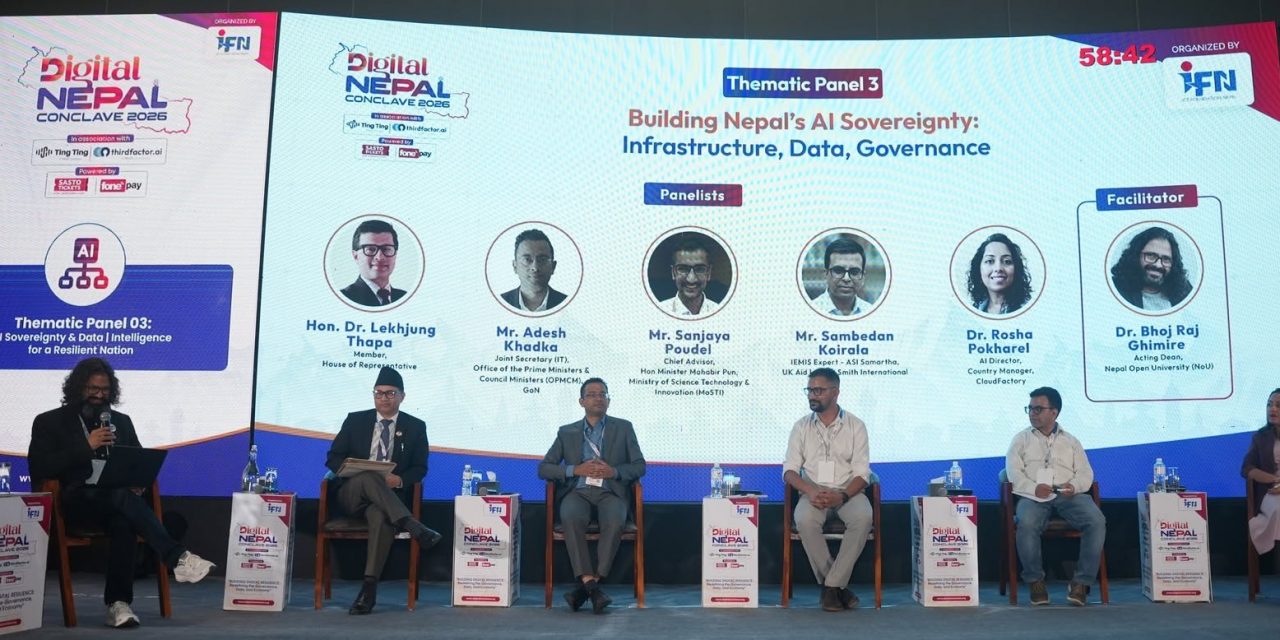
Another major segment focused on AI sovereignty and data, with discussions on national data sovereignty, AI infrastructure, data security, responsible and ethical AI, policy development and skilled human resources.
Participants also discussed how Nepal could build an AI ecosystem based on domestic data, infrastructure and institutional capacity while strengthening governance, security and policy frameworks.
The digital economy was another major area of discussion. The session covered digital innovation, investment, financial technology, transparency, entrepreneurship and the development of a skilled digital workforce. Participants discussed opportunities to expand technology-based entrepreneurship and strengthen the investment environment while linking innovation with economic growth.
The conclave also featured Digital Spark presentations showcasing technology and digital solutions developed in Nepal. Solutions and innovations from organizations including TingTing, Code X School, Third Factor AI, Nagarik App, Kata Ho, NAS-IT, IID, Sociair E-commerce, Lipi One, Everest Cloud, Ancoda Lab and Sky IT were presented.
TingTing also conducted live demonstrations of its digital solutions, including TingTing Omni Live Interaction, TingTing Outbound and TingTing Responsive Agent.
The concluding segment featured a “Leadership Dialogue: Digital Roadmap to 2027,” focusing on accelerating the digital industry, innovation and investment. The closing discussion also highlighted the potential of Nepal’s technology and startup ecosystem.
Former Minister and Member of the House of Representatives Jagadish Kharel, in his closing remarks, highlighted the growing interest in technology and innovation and expressed commitment to supporting the development of Nepal’s technology and ICT sector.
ICT Foundation Nepal Chairperson Razan Lamsal said the conclave has continued to serve as a common platform for dialogue and collaboration among the government, private sector, technology industry, development partners and other stakeholders.
According to the organizers, more than 50 national and international experts participated in different sessions of the conclave, which also featured exhibitions and presentations of technology and innovation solutions.
The conclave concluded with an emphasis that digital transformation should not be viewed merely as technological expansion but as an interconnected national priority involving governance, public service delivery, economic development, innovation and national resilience.