Kathmandu – A photography exhibition titled Nepal Today: In the Forest, In the Villages has been inaugurated in Lonato del Garda, Italy, showcasing the works of three prominent Nepali photographers — Kishor Sharma, Uma Bista, and Sagar Chhetri. Curated by renowned Italian curator Filippo Maggia, the exhibition will remain open to the public until August 30, 2026.
The exhibition presents a diverse and compelling portrait of contemporary Nepal through photography, highlighting themes of identity, culture, gender, and social change.
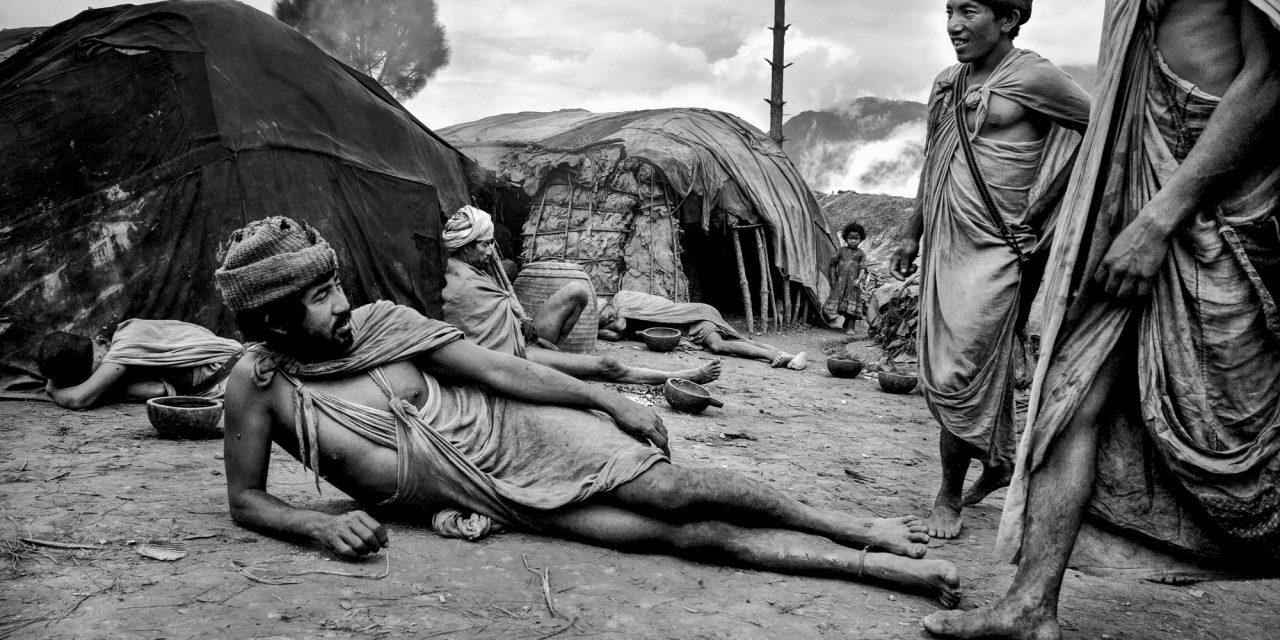
Photographer Kishor Sharma is exhibiting Living in the Mist, a project developed over six years documenting the nomadic Raute community. The work, also published as a photo book, offers a rare insight into the lives of the Rautes and their determination to preserve a traditional way of life despite growing pressures from the modern world.
Uma Bista’s series Our Songs from the Forest focuses on young women from Achham district who continue to live under the practice of Chhaupadi, a tradition that isolates women during menstruation by confining them to sheds and treating them as impure. Although Chhaupadi was outlawed in 2005 and criminalized in 2018, the practice remains prevalent in some rural communities due to deep-rooted cultural beliefs and social pressures.
Meanwhile, Sagar Chhetri’s project Eclipse explores the complex identity of people living in Nepal’s Madhesh region along the Nepal-India border. Through his work, Chhetri examines questions of belonging, recognition, and political struggle that have shaped the region and its people over the years.
In his introduction to the exhibition, curator Filippo Maggia noted that while photography in many Western countries appears to be searching for new direction, photographers in the Global South continue to use the medium as a powerful tool for social engagement and storytelling.
Maggia also praised Nepal’s emerging generation of contemporary artists, describing the country as a hub of young creative talent addressing issues such as gender, memory, identity, politics, religion, and culture. He highlighted the artists’ strong creative vision and determination despite limited institutional support and resources.
The exhibition catalogue has been published by the respected Italian publishing house Silvana Editoriale. The project has also received support from the Italian Ministry of Culture through its Strategia Fotografia 2025 programme.
The exhibition is expected to further strengthen international recognition of Nepali contemporary photography and provide a global platform for stories and perspectives from Nepal.