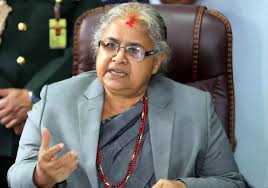
Kathmandu- Prime Minister Sushila Karki is poised to secure a landmark in Nepali politics by holding the House of Representatives (HoR) election on March 5, four days left to voting. Installed as the PM of interim government in a tumultuous time, Karki braved numerous hurdles, but navigated the situation deftly to arrive at present, ensuring the HoR election.
Entire State apparatus are fully prepared for the landmark event. Bureaucracy, political parties and candidates, security agencies, election commission and voters are well prepared and waiting eagerly the election day to make it a grand success.
Unprecedented movement
The Karki-government was formed following the September 8-9 Gen Z uprising. It was an unprecedented protest waged by the youths against the incumbent government in September 2025, advocating for good governance.
Confusion ran high among analysts, observers, academia and media whether the September 8-9 was a rebellion, protest, uprising, revolution or movement. Although some political leaders and parties castigated it as a mere ‘violence’, the uprising was later recognized as people’s movement by the government. Some media, political analysts, academia had, however, dubbed it a movement from the beginning.
It was in deed a huge shock to the entire Nepali polity that the movement collapsed then KP Oli-led government, caused dissolution of HoR, lower house of the federal parliament, and installed an interim government, giving a six-month’s time for fresh election.
After then PM KP Oli stepped down on September 9 in the wake of sheer chaos, President Ramchandra Paudel, as the Head of the State, had to play a vital role to place an executive head. The period from Oli’s exit to the appointment of Sushila Karki as the government head on September 12 was fluid.
The Nepali Army (NA) extended support to President Paudel in holding dialogues with various Gen Z groups and to restore peace and order in the country where massive property had turned into ashes and lives of over 70 persons, including 19 school and college students, perished in course of the movement.
Difference and challenges
After the formation of the government, PM Karki faced a tough time to bring together the diverse groups of Gen Zs and political parties. It was a difficult moment because the youths were utterly against old leaders and parties while election without participation of political parties could not be imagined. Expansion of government by picking proper persons was also equally challenging.
The morale of security agency, especially the Nepal Police, was all time low, as it also suffered worst during the two-day scourge. Boosting morale of Nepal Police and taking their confidence and prodding the Election Commission for election was another major responsibility. Large number of security weapons looted and inmates fled during the protest could pose threats to government’s effort to maintain peace and security. Over 14,000 prisoners and detainees had fled the jails from across the country, while 1,300 firearms were looted or lost during the movement. Some inmates after jail breaks began indulging in crimes.
Although the political parties like the Nepali Congress and the CPN UML were said to have agreed for Sushila Karki as the interim PM, they decried the dissolution of HoR as an unconstitutional move. The UML for long remained hesitant to go for HoR election, reasoning security. The UML and NC even knocked the judiciary for restoration of HoR.
As the government was formed for giving a political outlet to country and restoring democratic values, by handing over power to an elected government through HoR election, informing well the international community also counted. The spread of misinformation and disinformation could easily distract the government initiatives and produce counter narrative in no time.
The rage of Gen Z was high that they frequently demanded the government that it immediately arrested the party leaders, arguing they suppressed the protest, while the parties, humbled in the beginning, were gradually building presence and observing closely the government activities. Striking a balance was key at such condition.
Skillful navigation
Amidst such challenges, PM Karki picked some able leaders like Rameshwor Prasad Khanal, Balanand Sharma, Anil Sinha and Om Prakash Aryal so that she could get adequate practical advices and support on legal, administrative, financial and security fronts to move ahead judiciously. Picking other young and popular faces helped her incorporate Gen Z representation in the government. Khanal’s choice as Finance Minister was vital in taking proper decision on resource mobilization for HoR election in addition to restoring morale of private sectors which had also suffered much in the scourge.
Similarly, though late, Sharma’s entry as Cabinet member to handle foreign affairs, was useful in dealing with neighbours and global community. As he had already worked as a Nepali Army General and peace negotiator during army integration after the Maoist movement, his experience and expertise on security arrangement and control, and conflict resolution was an added value. In order to build good relations with the political parties and their talks to Gen Z youths, PM Karki mobilized her Cabinet members to earn parties’ confidence. The Gen Z leaders were also in regular contact.
Initially, President Paudel facilitated in bringing together parties/leaders and government and reminded them of importance of election to lift the country out of crisis. The tough stance of government and Gen Z against old parties and of the parties to government was gradually lowered, thereby creating mutual trust for broader consensus on election. PM Karki prioritized continuous dialogues and talks to parties/leaders and Gen Z groups that was inherently intended to hold the election successfully.
The visit of the ministers to parties’ offices and requests to the former Presidents for their support in building election atmosphere, also paved way to create atmosphere for election. It helped in narrowing down parties’ distance to government. The government also formed an inquiry commission on Gen Z movement for investigation. It was the demand of political parties as well.
Importantly, the government recovered most of the firearms (723 out of 1,300 by Dec 2025) looted during the protest; and nearly 10,000 out of 14,000 prisoners and detainees fleeing the jails are brought back to respective jails. Similarly, over 465 police offices damaged during the protest have been restored and operation resumed fully. It was instrumental in restoring security persons’ morale and maintaining peace and security.
On the other hand, the shake up in the largest democratic party, Nepali Congress, with the Gagan Thapa elected as new President, convention of communist parties, and mergers of various political forces gave further impetus to the election atmosphere. Although these parties’ convention and leadership change was not directed towards HoR election, the voices for addressing change and Gen Z youth’s aspiration was pronounced this time compared to the previous events.
Gagan Thapa’s election as NC President through special general convention was a revolt against incumbency and old guards. It reflected demands of Gen Z youths.
Now, the government has got all sides’ support for holding the election successfully. New political forces like Rastriya Swatantra Party (RSP), Shram Sanskriti Party, and Ujyalo Nepal Party; and the parties with legacy like NC, UML and communist ones are participating in the HoR election. They released their election manifestos and campaigned in favour of respective candidates.
Decisive moment
Prime Minister Karki deserves accolade for such numerous activities carried out over a short time and leading a country towards HoR election, a decisive moment for the Nepalis to elect new leadership for better Nepal. Karki, who had left a positive impression in judiciary with her bold stands and orders as Chief Justice, is now poised to set a history, giving outlet to political crisis in Nepal. With the conducive atmosphere for HoR election and its successful conduct after three days, her landmark performance of political leadership is in sight. rss